Thermodynamics Chat Support Connect to Thermodynamics
Message to Thermodynamics

Request a Quote

Dubai
+971 ▾
  • Afghanistan +93
  • Åland Islands +358
  • Albania +355
  • Algeria +213
  • American Samoa +1
  • Andorra +376
  • Angola +244
  • Anguilla +1
  • Antigua and Barbuda +1
  • Argentina +54
  • Armenia +374
  • Aruba +297
  • Australia +61
  • Austria +43
  • Azerbaijan +994
  • Bahamas +1
  • Bahrain +973
  • Bangladesh +880
  • Barbados +1
  • Belarus +375
  • Belgium +32
  • Belize +501
  • Benin +229
  • Bermuda +1
  • Bhutan +975
  • Bolivia +591
  • Bosnia and Herzegovina +387
  • Botswana +267
  • Brazil +55
  • British Indian Ocean Territory +246
  • British Virgin Islands +1
  • Brunei +673
  • Bulgaria +359
  • Burkina Faso +226
  • Burundi +257
  • Cambodia +855
  • Cameroon +237
  • Canada +1
  • Cape Verde +238
  • Caribbean Netherlands +599
  • Cayman Islands +1
  • Central African Republic +236
  • Chad +235
  • Chile +56
  • China +86
  • Christmas Island +61
  • Cocos (Keeling) Islands +61
  • Colombia +57
  • Comoros +269
  • Congo +243
  • Congo +242
  • Cook Islands +682
  • Costa Rica +506
  • Côte d’Ivoire +225
  • Croatia +385
  • Cuba +53
  • Cyprus +357
  • Czech Republic +420
  • Denmark +45
  • Djibouti +253
  • Dominica +1
  • Dominican Republic +1
  • Ecuador +593
  • Egypt +20
  • El Salvador +503
  • Equatorial Guinea +240
  • Eritrea +291
  • Estonia +372
  • Ethiopia +251
  • Falkland Islands +500
  • Faroe Islands +298
  • Fiji +679
  • France +33
  • French Guiana +594
  • French Polynesia +689
  • Gabon +241
  • Gambia +220
  • Georgia +995
  • Germany +49
  • Ghana +233
  • Gibraltar +350
  • Greece +30
  • Greenland +299
  • Grenada +1
  • Guam +1
  • Guatemala +502
  • Guernsey +44
  • Guinea +224
  • Guinea-Bissau +245
  • Guyana +592
  • Haiti +509
  • Honduras +504
  • Hong Kong +852
  • Hungary +36
  • Iceland +354
  • India +91
  • Indonesia +62
  • Iran +98
  • Iraq +964
  • Ireland +353
  • Isle of Man +44
  • Israel +972
  • Jamaica +1
  • Japan +81
  • Jersey +44
  • Jordan +962
  • Kazakhstan +7
  • Kenya +254
  • Kiribati +686
  • Kosovo +383
  • Kuwait +965
  • Kyrgyzstan +996
  • Laos +856
  • Latvia +371
  • Lebanon +961
  • Lesotho +266
  • Liberia +231
  • Libya +218
  • Liechtenstein +423
  • Lithuania +370
  • Luxembourg +352
  • Macau +853
  • Macedonia (FYROM) +389
  • Madagascar +261
  • Malawi +265
  • Malaysia +60
  • Maldives +960
  • Mali +223
  • Malta +356
  • Marshall Islands +692
  • Martinique +596
  • Mauritania +222
  • Mauritius +230
  • Mayotte +262
  • Mexico +52
  • Micronesia +691
  • Moldova +373
  • Monaco +377
  • Mongolia +976
  • Montenegro +382
  • Montserrat +1
  • Mozambique +258
  • Myanmar (Burma) +95
  • Namibia +264
  • Nauru +674
  • Nepal +977
  • Netherlands +31
  • New Caledonia +687
  • New Zealand +64
  • Nicaragua +505
  • Niger +227
  • Nigeria +234
  • Niue +683
  • Norfolk Island +672
  • North Korea +850
  • Northern Mariana Islands +1
  • Oman +968
  • Pakistan +92
  • Palau +680
  • Palestine +970
  • Panama +507
  • Papua New Guinea +675
  • Paraguay +595
  • Peru +51
  • Philippines +63
  • Poland +48
  • Portugal +351
  • Puerto Rico +1
  • Qatar +974
  • Romania +40
  • Rwanda +250
  • Saint Barthélemy +590
  • Saint Helena +290
  • Saint Kitts and Nevis +1
  • Saint Lucia +1
  • Saint Martin +590
  • Saint Pierre and Miquelon +508
  • Saint Vincent and the Grenadines +1
  • Samoa +685
  • San Marino +378
  • São Tomé and Príncipe +239
  • Saudi Arabia +966
  • Senegal +221
  • Serbia +381
  • Seychelles +248
  • Sierra Leone +232
  • Singapore +65
  • Sint Maarten +1
  • Slovakia +421
  • Slovenia +386
  • Solomon Islands +677
  • Somalia +252
  • South Africa +27
  • South Korea +82
  • South Sudan +211
  • Spain +34
  • Sri Lanka +94
  • Sudan +249
  • Suriname +597
  • Svalbard and Jan Mayen +47
  • Swaziland +268
  • Sweden +46
  • Switzerland +41
  • Syria +963
  • Taiwan +886
  • Tajikistan +992
  • Tanzania +255
  • Thailand +66
  • Timor-Leste +670
  • Togo +228
  • Tokelau +690
  • Tonga +676
  • Trinidad and Tobago +1
  • Tunisia +216
  • Turkey +90
  • Turkmenistan +993
  • Turks and Caicos Islands +1
  • Tuvalu +688
  • U.S. Virgin Islands +1
  • Uganda +256
  • Ukraine +380
  • United Arab Emirates +971
  • United Kingdom +44
  • United States +1
  • Uruguay +598
  • Uzbekistan +998
  • Vanuatu +678
  • Vatican City +39
  • Venezuela +58
  • Vietnam +84
  • Wallis and Futuna +681
  • Western Sahara +212
  • Yemen +967
  • Zambia +260
  • Zimbabwe +263
Call for our Solutions
Email Us
Explore our solutions
Select Product
Ice Cream and Frozen Dairy Refrigeration

Fruits & Vegetables Refrigeration Solutions

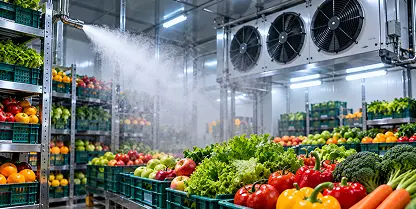
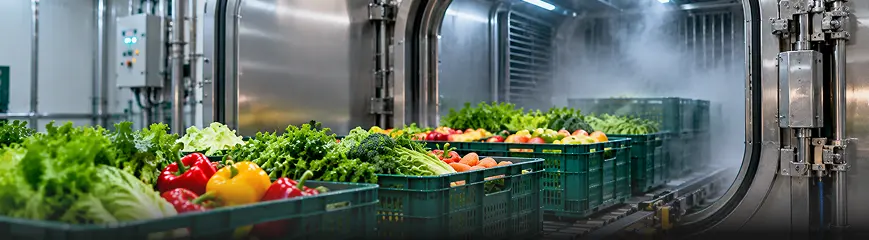
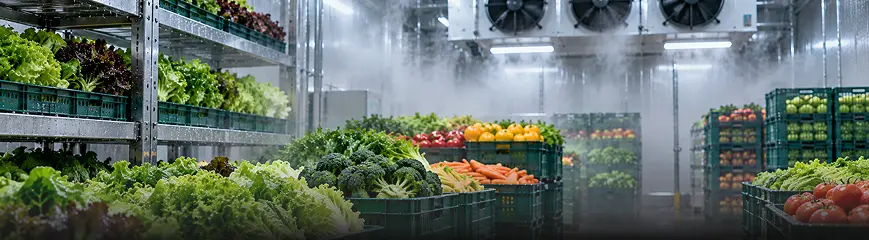
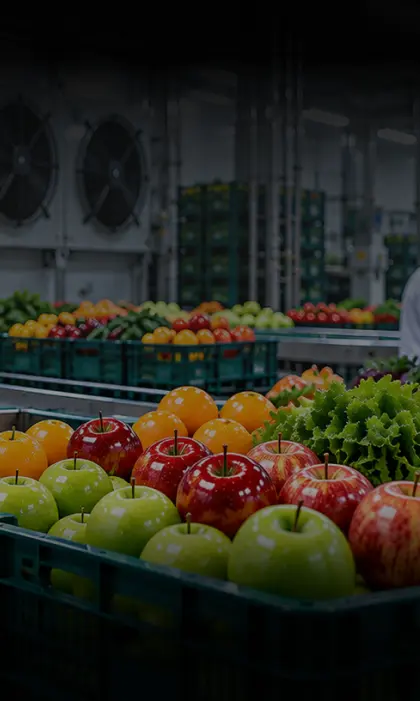
Post-harvest cooling systems for fresh produce, controlled atmosphere storage, ripening rooms and cold-chain management—engineered to preserve quality, extend shelf life and maintain reliable temperature control.

-
°C
Leafy Greens & Berries
-
% RH
High-Humidity Storage
-
x
CA Storage Life Extension
/
 Cold-Chain Reliability

Why Fresh Produce Refrigeration Is Different

Fresh produce remains biologically active after harvest. Precise control of temperature, humidity, airflow and ethylene is essential to slow deterioration and preserve marketable quality.

06
Critical Challenges
01

Rapid Post-Harvest Deterioration

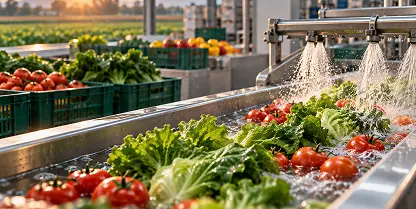
Fresh produce continues to respire and lose moisture after harvest, which can accelerate deterioration and reduce overall product quality. Rapid cooling helps remove field heat quickly, slowing respiration, limiting moisture loss, and reducing the conditions that contribute to spoilage. Maintaining controlled temperatures from the early post-harvest stage helps preserve freshness, texture, appearance, and overall quality while supporting a longer shelf life.

Temperatures: 0–2°C for most leafy produce
Key Requirement: Rapid Precooling
Rapid Post-Harvest Deterioration
02

Diverse Temperature Requirements

Different fruits and vegetables require specific temperature conditions throughout cooling and storage. Maintaining product-specific temperatures helps control respiration, reduce moisture loss and limit deterioration. Refrigeration systems must provide flexible and precise temperature management to protect the quality, texture and shelf life of different produce types.

Temperatures: 0–13°C depending on produce type
Key Requirement: Multi-Zone Temperature Control
Diverse Temperature Requirements
03

Humidity Control

Fresh produce can lose moisture quickly after harvest, affecting weight, texture and overall quality. Maintaining appropriate humidity levels alongside controlled temperatures helps reduce dehydration and preserve freshness throughout cooling and storage. Effective humidity management supports better product condition and longer shelf life.

Target: 90–98% relative humidity
Key Requirement: High-Humidity Refrigeration
Humidity Control
04

Ethylene Management

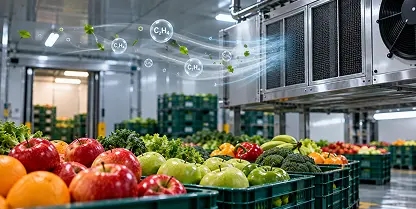
Some fruits and vegetables naturally produce ethylene, which can accelerate ripening and increase the risk of deterioration in ethylene-sensitive produce. Managing ethylene levels within refrigerated storage helps maintain a more controlled environment, slow unwanted ripening and reduce premature quality loss. Effective ethylene management supports consistent product condition, preserves freshness and appearance, and helps extend the usable storage life of fresh produce.

Applies to: ripening fruit and ethylene-sensitive produce
Key Requirement: Ethylene Scrubbing & Ventilation
Ethylene Management
05

Complex Cold Chains

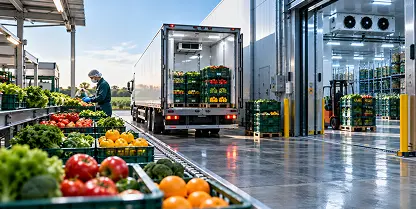
Fresh produce moves through multiple stages after harvest, including precooling, refrigerated storage, handling, transportation and final distribution. Maintaining stable and controlled conditions throughout each stage is essential to minimize temperature fluctuations and prevent unnecessary deterioration. A reliable cold chain helps preserve freshness, texture and overall product quality while reducing losses as fruits and vegetables move from harvest to their final destination.

Spans: harvest to retail distribution
Key Requirement:  End-to-End Cold Chain Integration
Complex Cold Chains
06

Energy & Water Consumption

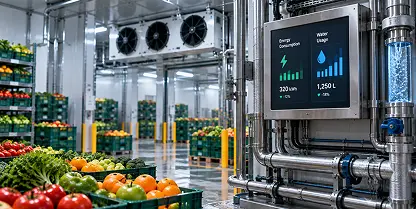
Fresh produce cooling and storage can require significant energy and water across precooling, refrigeration, humidity control and handling operations. Efficient system design helps reduce unnecessary consumption while maintaining the stable environmental conditions required to protect produce quality. Optimized refrigeration and water management can support lower operating costs, reduced resource use and more efficient cold-chain performance.

Focus: cooling and hydro-cooling systems
Key Requirement: Efficient Precooling Systems
Energy and Water Consumption

Fresh produce continues to respire and lose moisture after harvest, which can accelerate deterioration and reduce overall product quality. Rapid cooling helps remove field heat quickly, slowing respiration, limiting moisture loss, and reducing the conditions that contribute to spoilage. Maintaining controlled temperatures from the early post-harvest stage helps preserve freshness, texture, appearance, and overall quality while supporting a longer shelf life.

Temperatures: 0–2°C for most leafy produce
Key Requirement: Rapid Precooling
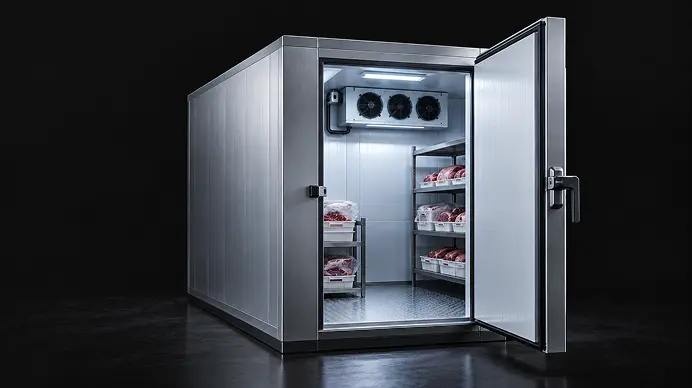
Frozen meat storage

Different fruits and vegetables require specific temperature conditions throughout cooling and storage. Maintaining product-specific temperatures helps control respiration, reduce moisture loss and limit deterioration. Refrigeration systems must provide flexible and precise temperature management to protect the quality, texture and shelf life of different produce types.

Temperatures: 0–13°C depending on produce type
Key Requirement: Multi-Zone Temperature Control
Diverse Temperature Requirements

Fresh produce can lose moisture quickly after harvest, affecting weight, texture and overall quality. Maintaining appropriate humidity levels alongside controlled temperatures helps reduce dehydration and preserve freshness throughout cooling and storage. Effective humidity management supports better product condition and longer shelf life.

Target: 90–98% relative humidity
Key Requirement: High-Humidity Refrigeration
Humidity Control

Some fruits and vegetables naturally produce ethylene, which can accelerate ripening and increase the risk of deterioration in ethylene-sensitive produce. Managing ethylene levels within refrigerated storage helps maintain a more controlled environment, slow unwanted ripening and reduce premature quality loss. Effective ethylene management supports consistent product condition, preserves freshness and appearance, and helps extend the usable storage life of fresh produce.

Applies to: ripening fruit and ethylene-sensitive produce
Key Requirement: Ethylene Scrubbing & Ventilation
Ethylene Management

Fresh produce moves through multiple stages after harvest, including precooling, refrigerated storage, handling, transportation and final distribution. Maintaining stable and controlled conditions throughout each stage is essential to minimize temperature fluctuations and prevent unnecessary deterioration. A reliable cold chain helps preserve freshness, texture and overall product quality while reducing losses as fruits and vegetables move from harvest to their final destination.

Spans: harvest to retail distribution
Key Requirement:  End-to-End Cold Chain Integration
Complex Cold Chains

Fresh produce cooling and storage can require significant energy and water across precooling, refrigeration, humidity control and handling operations. Efficient system design helps reduce unnecessary consumption while maintaining the stable environmental conditions required to protect produce quality. Optimized refrigeration and water management can support lower operating costs, reduced resource use and more efficient cold-chain performance.

Focus: cooling and hydro-cooling systems
Key Requirement: Efficient Precooling Systems
Energy and Water Consumption

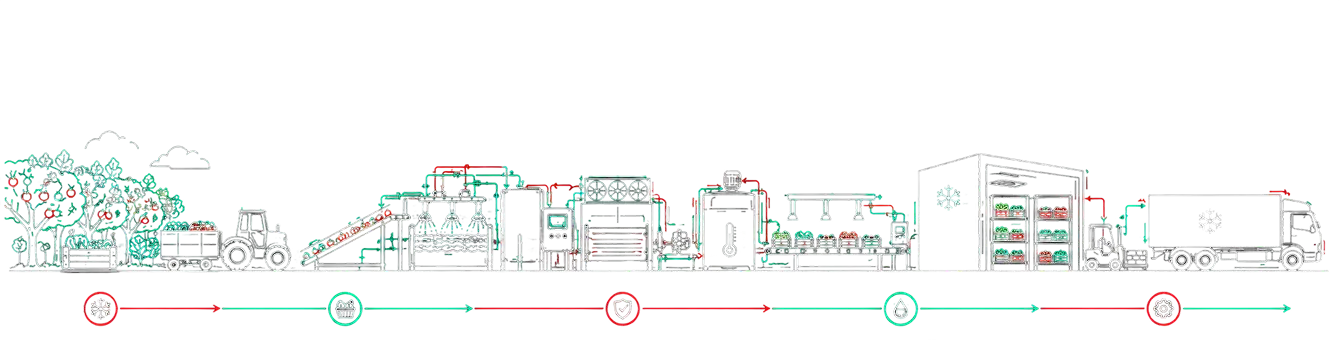
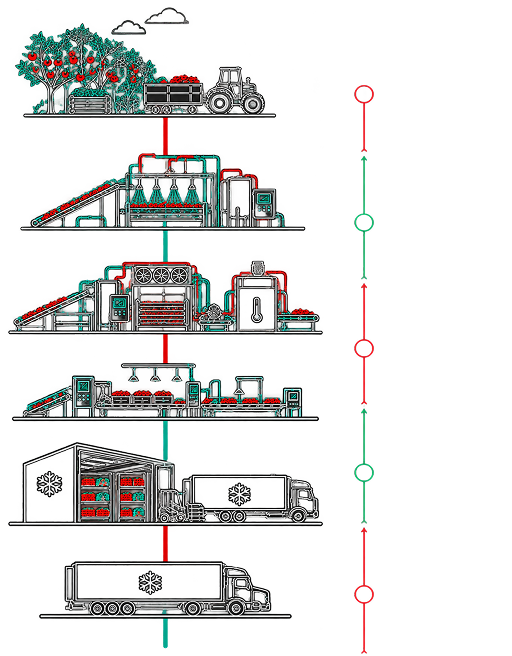
One Cold Chain. Multiple Critical Temperatures.

Fresh produce requires different cooling and storage conditions from harvest through precooling, storage, ripening and distribution.

Ice cream processing equipment

One Cold Chain. Multiple Critical Temperatures.

Fresh produce requires different cooling and storage conditions from harvest through precooling, storage, ripening and distribution.

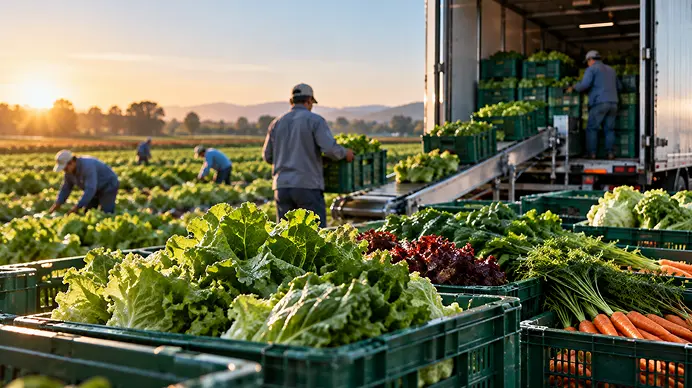
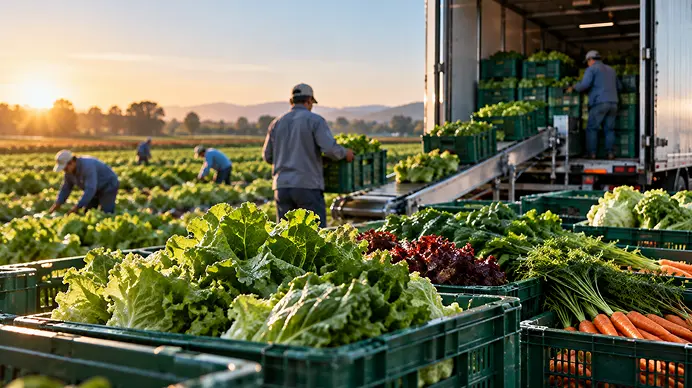
Harvest & Collection

Rapid temperature control after harvest helps reduce respiration, moisture loss, and deterioration, preserving produce quality.

Harvest & Collection
Harvest Temperature
Ambient Conditions
Time Before Cooling
Produce Type
Precooling

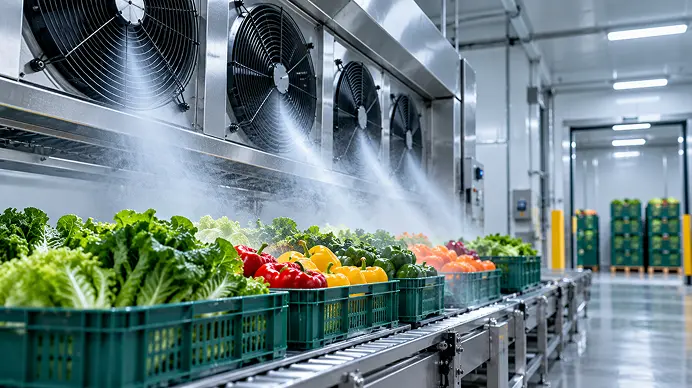
Precooling quickly removes field heat using forced-air, hydro or vacuum cooling to preserve freshness and shelf life.

Precooling
Forced Air Cooling
Vacuum Cooling
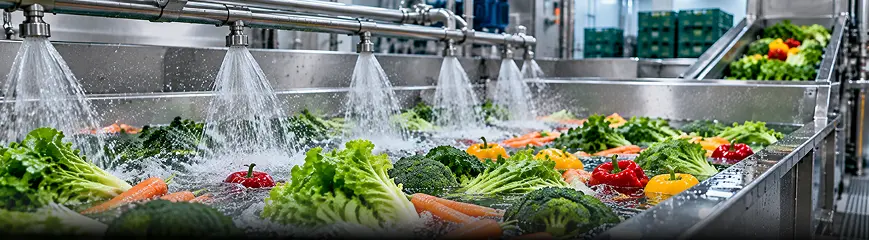
Hydro-Cooling
Rapid Heat Removal
0–2°C

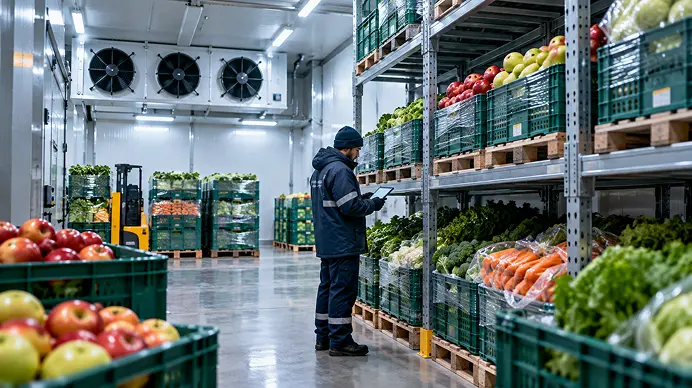
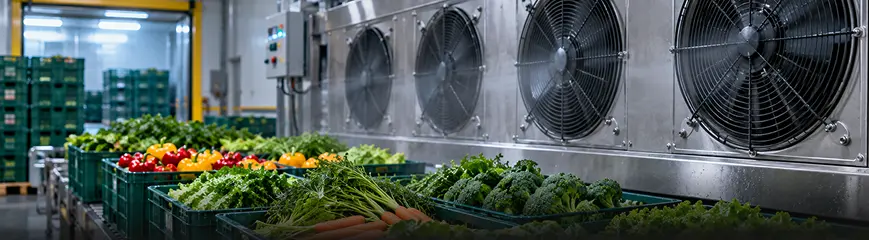
Precise temperature and humidity control helps reduce dehydration and preserve produce quality during storage.

Cold Storage
Produce Type
Temperature
Relative Humidity
Storage Duration
1–3% O₂

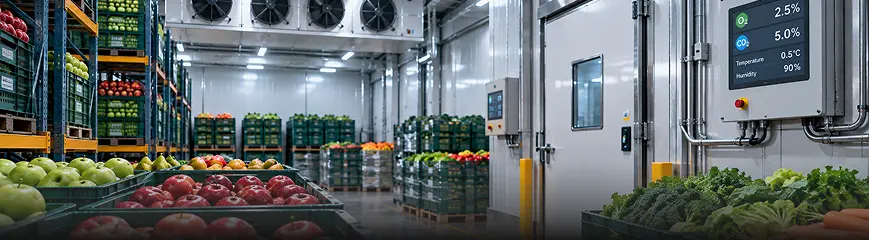
Controlled Atmosphere storage regulates gases, temperature, and humidity to slow deterioration and extend storage life.

CA Storage
Oxygen Level
CO₂ Level
Temperature
Relative Humidity
10–25°C

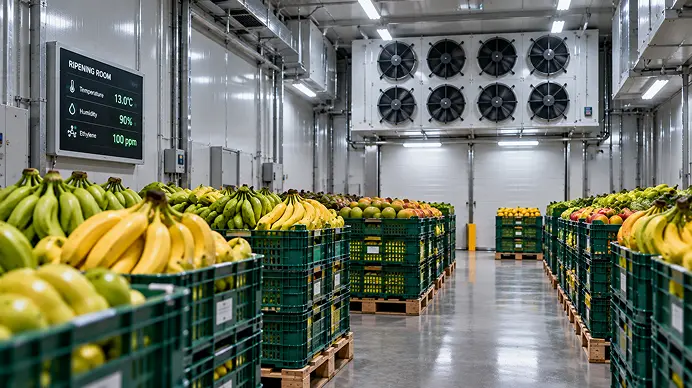
Ripening rooms control temperature, humidity, ethylene, and airflow for consistent ripening and better produce quality.

Digital temperature and defrost controls
Temperature
Ethylene
Relative Humidity
Air Circulation
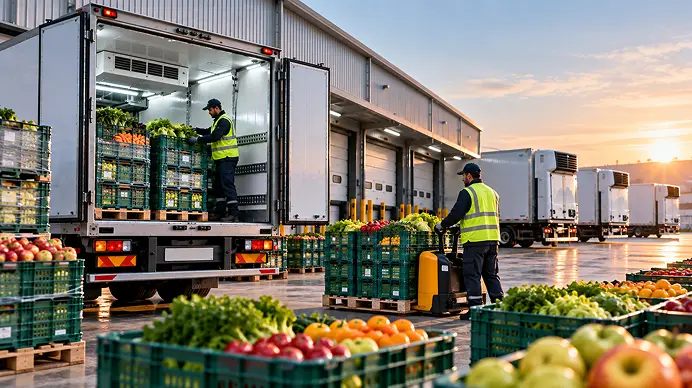
COLD CHAIN

Pre-cooled transport and temperature monitoring help protect produce quality throughout distribution.

Dedicated -20°C meat freezer
Pre-Cooled Transport
Temperature Monitoring
Insulated Vehicles
Efficient Loading

Engineered Around Your Dairy Processing Load

Fresh produce refrigeration requirements vary depending on daily throughput, incoming product temperature, produce type, cooling method and storage duration.

Processing Capacity

Designed Around Facility Throughout

Temperature Control Protects More Than the Product

Precise storage conditions help reduce moisture loss, slow deterioration, and maintain produce quality throughout refrigerated storage.

95–98% RH High-Humidity Produce Storage
Temperature & Humidity Balance
Stable
Temperature
→
Correct
Humidity
→
Reduced
Moisture Loss
→
Better Produce
Quality
Controlled Conditions Maintains freshness · Preserves texture · Reduces moisture loss · Supports longer storage life
Unstable Conditions Faster deterioration · Increased moisture loss · Texture decline · Shorter storage life

Two Independent Refrigeration Systems

Redundant condensing units support reliable, continuous -20°C operation.

SYSTEM 01 34 HP
→
FREEZER ROOM -20°C
←
SYSTEM 02 34 HP
Redundant Configuration

2 × 34 HP

Two independent refrigeration systems, each rated at 34 HP, support continuous -20°C freezer operation.

System Specification

Repeated partial thawing + refreezing

Compressor type: Semi-hermetic reciprocating Configuration: Two independent circuits

Why It Matters

Two independent refrigeration systems provide redundancy for continuous frozen storage.

Condensing units: 2 × 34 HP, air-cooled, freezer duty.

Digital Control with Automatic Defrost

Temperature and defrost functions are managed through an integrated digital control system.

Automated

Defrost & Temperature Control

01 Temperature Control
→
02 Automatic Defrost
→
03 Freezer Operation
Control Specification
Control Type Digital Temperature control
Defrost Type Electric Automatic operation
Systems Controlled 2 Independent refrigeration circuits
Digital temperature and automatic defrost control were integrated as part of the freezer conversion.

Storage Temperature Matters

Temperature fluctuations above the ideal storage condition accelerate quality deterioration and shorten usable shelf life.

Complete Refrigeration Solutions for Fresh Produce

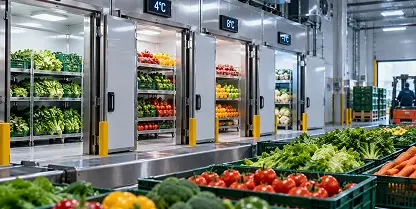
Integrated cooling systems engineered around the complete post-harvest cold chain rather than isolated equipment.

Continuous Ice Cream Freezers

FORCED AIR COOLING

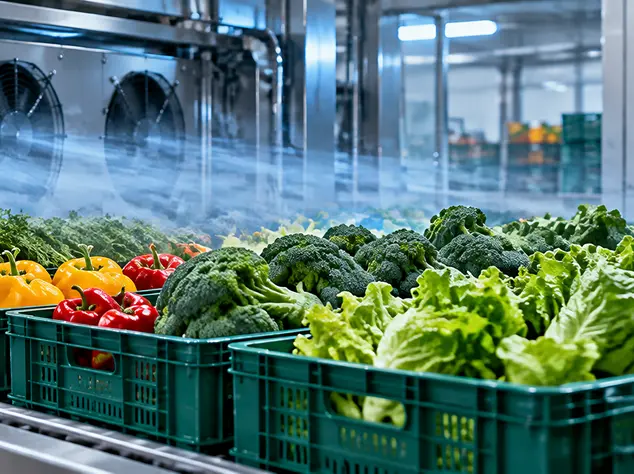
Best For Most fruits and selected vegetables requiring rapid post-harvest cooling.
  • Rapid field heat removal
  • Water-efficient cooling
  • Controlled airflow
  • Suitable for multiple produce types

Specifications

Cooling Rate: 4–10°C/hr
Water Use: 0–0.1 L/kg

Complete Refrigeration Solutions for Fresh Produce

Integrated cooling systems engineered around the complete post-harvest cold chain rather than isolated equipment.

FORCED AIR COOLING
Best For Most fruits and selected vegetables requiring rapid post-harvest cooling.
  • Rapid field heat removal units
  • Water-efficient cooling
  • Controlled airflow
  • Suitable for multiple produce types

Specifications

Cooling Rate: 4–10°C/hr
Water Use: 0–0.1 L/kg

View System
Vacuum Cooling
Best For Leafy vegetables and produce with high surface-area-to-volume ratio.
  • Extremely fast cooling times
  • Uniform product cooling
  • Ideal for leafy and high-surface-area produce
  • Low water requirement

Specifications

Cooling Time: Minutes
Water Use: Minimal

View System
Hydro-Cooling
Best For Root vegetables, stone fruit and produce tolerant of surface moisture.
  • Direct contact water cooling
  • Fast heat transfer
  • Reduces wilting
  • Water recirculation compatible

Specifications

Cooling Rate: Fast, direct contact
Water Recirculation: Up to 95%+

View System
REFRIGERANT PIPING
Best For Apples, pears and produce requiring extended storage periods.
  • Modified oxygen and CO2 levels
  • Extended storage life
  • Slows ripening and senescence
  • Suited for long-term storage

Specifications

Storage Life Extension: 2–3×
Atmosphere: Low O2 / Elevated CO2

View System
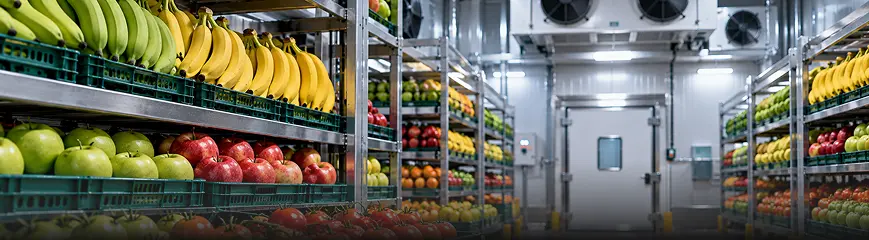
Ripening Rooms
Best For Bananas, tomatoes, mangoes and other climacteric fruit.
  • Controlled ethylene application
  • Precise temperature staging
  • Uniform ripening
  • Consistent retail-ready quality

Specifications

Temperature Control: Staged profiles
Ethylene: Precisely dosed

View System
High-Humidity Cold Rooms
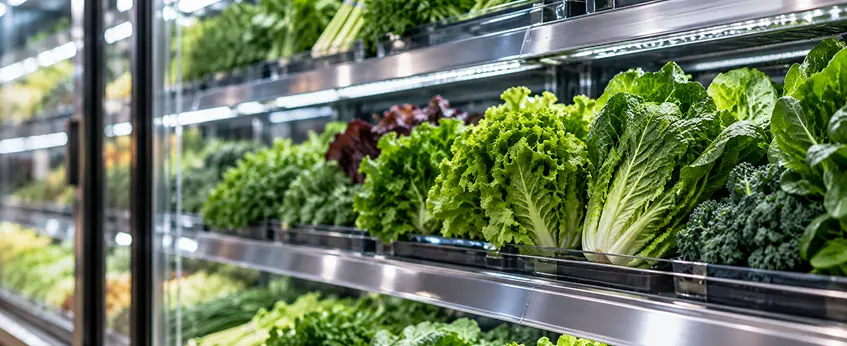
Best For Leafy greens, berries and other high-respiration produce.
  • Sustained 90–98% RH
  • Reduced moisture loss
  • Anti-condensation design
  • Continuous monitoring

Specifications

Humidity: 90–98% RH
Temperature: 0–4°C

View System

The Right Conditions for Every Fresh Produce

Premium Ice Cream

Leafy Greens

High-humidity refrigeration designed to minimize dehydration and maintain crisp texture.

View Solutions
Storage Temperature 0–2°C
Relative Humidity 95–98% RH
Critical Control Temperature & humidity monitoring
Shelf Life Stable conditions to reduce wilting and deterioration

What matters most for your facility?

Recommended system Forced Air Precooling
View Solution

Built for Quality, Compliance & Traceability

Controlled refrigeration supports quality, compliance, and cold-chain reliability.

GlobalGAP
BRCGS
SQF
GCC / GSO Standards
Temperature Monitoring

Traceability & Documentation

Temperature Records
Calibration Certificates
Cooling Validation
Corrective Action Records
Transport Logs

Lower Refrigeration Energy Without Compromising Dairy Quality

Refrigeration energy efficiency
Reduce dependence on water-intensive cooling methods.
Reuse treated cooling water in hydro-cooling systems.
Match refrigeration output to real-time cooling demand.
Recover condenser heat for facility hot-water applications.
Engineered air distribution for uniform, efficient cooling.
Continuous monitoring and tuning of refrigeration performance.
95%+
Potential water recirculation with efficient hydro-cooling systems.

Refrigeration Performance You Can Measure

Client Profile

Major produce distribution operation serving more than 500 retail outlets.

Challenge

Slow room cooling, dehydration losses, mixed-product storage and temperature-control issues.

Solution Implemented

Forced-air precooling, high-humidity rooms, CA storage, ethylene management and continuous monitoring.

Read More
85%
Reduction in Cooling Time
1.2%
Dehydration Losses
10 → 18 Days
Lettuce Shelf Life
90 → 240 Days
Apple Shelf Life

Client Profile

Strawberry and blueberry exporter supplying EU supermarkets, with seasonal throughput of 20 tons/day.

Challenge

Traditional cooling could not consistently meet EU quality requirements. Air freight required precise 0°C conditions, 20–25% of shipments faced buyer rejection, and limited shelf life restricted sea-freight options

Solution Implemented

Vacuum cooling for strawberries, CRYO-RAPID® for blueberries, active air containers for controlled transport, modified-atmosphere packaging for sea freight, and blockchain-based temperature tracking.

Read More

Client Profile

Banana ripening and distribution operation serving 150+ retail outlets with 50 tons/week throughput

Challenge

Traditional ripening produced inconsistent colour, temperature variations of ±3–5°C, uneven ethylene distribution, and 8–10% unsaleable product. Customer complaints also affected perceived quality.

Solution Implemented

Six precision ripening rooms with individual controls, improved ethylene circulation, ±0.5°C temperature control, real-time monitoring, and ripening schedules integrated with retail demand.

Read More

What Does Better Dairy Refrigeration Return to Your Business?

15–25% Potential Energy Reduction
4–6 Years Typical ROI
Ice cream cold chain process from raw milk storage to distribution
Reduced Product Losses · Quality Premium · Energy Savings · Water Savings · Operational Efficiency

Fresh Produce Refrigeration Questions Answered

Fresh produce requires product-specific conditions, ranging from approximately 0–2°C for leafy vegetables to 10–13°C for many tropical fruits.

Precooling rapidly removes field heat immediately after harvest, while regular cold storage maintains a stable temperature over an extended period.

Rapid precooling slows respiration and moisture loss, helping preserve freshness, texture and shelf life before storage or transport.

Low humidity accelerates wilting and shrinkage, while properly controlled high humidity helps minimize moisture loss and maintain crispness.

Chilling injury occurs when chilling-sensitive produce, often tropical fruit, is stored below its safe temperature threshold, causing tissue damage.

Ethylene accelerates ripening and senescence, so ethylene-producing and ethylene-sensitive produce must often be stored and ventilated separately.

Ripening rooms apply controlled ethylene, temperature and humidity in staged profiles to bring produce to consistent, retail-ready ripeness.

Water recirculation in hydro-cooling systems and shifting toward forced-air precooling can significantly reduce overall water consumption.

Premium ice cream products in cold storage

Upgrade Your Produce Cold Chain

Tell us about your produce types, daily throughput, cooling requirements and storage conditions. We'll help identify opportunities to improve cooling performance, product quality and operational efficiency.

Request a Quote

Tell us more about yourself and what you have got in mind.

Eco-Smart, Turnkey Cooling Solutions
for Tomorrow

We provide advanced commercial cooling solutions that reduce emissions and drive energy-efficient, sustainable performance.

Request a Quote

Tell us more about yourself and what
you have got in mind.